
Before You Walk in the Room: Audition Advice from Resident Music Director Kevin Robert White
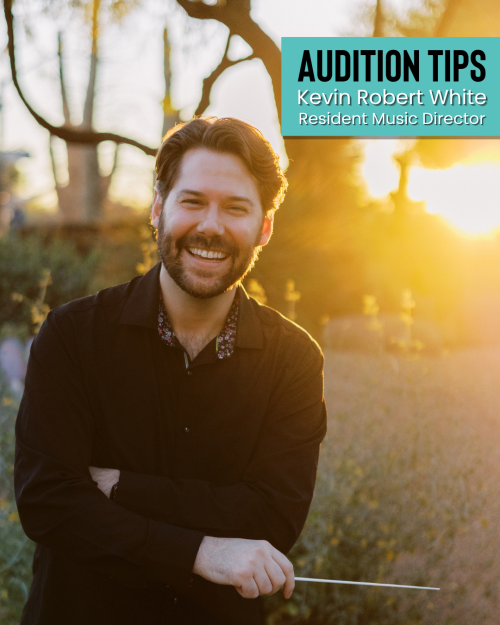
By The Phoenix Theatre Company
Auditions are just days away, and that means performers are running material, second-guessing choices, and trying to figure out what the room is actually looking for.
We asked The Phoenix Theatre Company’s Resident Music Director to break down what he’s looking for, and his advice might not be what you expect.
Q: What is the role of a Resident Music Director?
White: As Resident Music Director, I music direct the majority of our musicals in the stunning, brand-new Stephenson Theatre, while also overseeing all things music-related across our other stages. That includes hiring the musicians for each orchestra, programming the keyboards for every production, and coordinating orchestration details with each show’s music director. Beyond conducting performances, my core responsibility is to uphold the musical integrity of each production — honoring the vision the composer intended from the very first note.
Q: What advice do you have for actors who want to stand out in auditions?
White: Be yourself. It sounds almost too simple, but it’s one of the hardest things to actually do. Being grounded and genuinely vulnerable in performance is both terrifying and humbling — and it’s exactly what makes someone unforgettable.
I performed on stage before I found my true passion in music direction, and when I auditioned, I was constantly chasing what I thought they wanted to see. Yes, it matters to choose material that fits the season — but what matters more is choosing music where you can show up authentically. Not a polished character performance. You.
Don’t obsess over hitting the highest note or manufacturing an emotional moment. Choose material that makes you happy. If everyone picks what they think we want to see, we’ll watch the same audition on repeat all day. The person who stands out is the one who strips away the stylized performance and just exists in the room. Take a breath, ground yourself, and sing your song or deliver your monologue as if you wrote it and no one is watching.
Q: How important is it for actors to have their music properly marked and prepped?
White: Enormously important — and here’s why: imagine being the accompanist in a ten-hour audition day with hundreds of performers cycling through. Their brain is melting and their fingers are aching. Spoken instructions help, but clearly marked music is what ensures nothing gets lost. Here’s exactly how I like to see it:
- Use a binder. Hole-punched or in non-glare sleeves — either works, but a binder is non-negotiable. Loose pages on a piano will blow off from the AC or get knocked over mid page-turn. Protect your music (and your pianist’s sanity).
- Mark your start and end clearly. Write “Start” and use a bracket [ at the beginning of your starting measure and write “End” and use a bracket ] at the end of your cut — even if it’s the final bar of the song, still write “End.” Always include a short intro before you sing so you can settle into the tempo and the piano’s volume.
- Give your tempo vocally. After pointing out your start and end, say “My tempo is…” and demonstrate. Don’t snap or clap in the pianist’s face — give them space. A subtle physical groove, or tapping the rhythm on your chest, works beautifully.
- Pro tip: When giving tempo, sing the accompaniment line, not your vocal melody. If your cut opens on a sustained whole note, the pianist has nothing to lock onto. But sing them the rhythm of the accompaniment and they’ll find it instantly.
- Flag tempo changes. Highlight markings like rit., rall., or a tempo so the pianist can spot them quickly under pressure.
- Pro tip: Write “Thank you” at the end of your cut. You may be flustered and forget to say it in the moment — now it’s already there.
Q: What’s one of the most rewarding aspects of your job?
White: I genuinely love being a music director. Having come up as a performer, I know firsthand what it feels like to stand in front of a room and put yourself on the line — the nerves, the racing thoughts, the vulnerability. So when someone pushes through that fear and delivers a real moment, it reminds me exactly why I fell in love with theatre.
I also coach and give voice lessons, which makes it especially meaningful when I watch a student conquer something they once struggled with. That pride never gets old.
And then there’s frisson — that involuntary rush of goosebumps when someone truly connects to their material. Music, performance, art that genuinely moves you. I chase that feeling every single day, and this job gives me many opportunities to experience that. I get goosebumps, and I love it.
Q: What tips do you have for performers who consider themselves dancers first, where singing solo might feel intimidating?
White: There is so much to love about a song that has absolutely nothing to do with the technical sound of your voice. You can sell a song without being a powerhouse vocalist — the key is choosing material that lives comfortably in your range. Don’t reach for the high-belt number if you’re a head-voice singer. Don’t fight your voice; work with it.
Think about the song you love to blast in the car on the way to meet your friends. That energy, that feeling — that’s what we want to see. Stop worrying about the sound and start focusing on the vibe you can create. Dancers already know how to fill a room physically; that’s actually something I spend a lot of time teaching singers. You have a genuine leg up (no pun intended) — you’re at home in your body, and that translates directly to storytelling.
So own it, have fun, and don’t stress. (And if matching pitch is a real concern, a few sessions with a good voice teacher will genuinely surprise you.)
Q: Any additional tips for performers auditioning for the 26/27 Season?
White: The waiting room can be an intimidating place — loud, chatty, full of energy that isn’t always helpful. Give yourself permission to protect your focus. There’s nothing rude about saying, “I’d love to catch up after — I just need a few minutes to get in the zone.” Noise-cancelling headphones and a hype playlist are completely fair game.
Above all, remember: we want a glimpse of who you are.
And don’t be afraid to mess up. Truly — I love seeing an actor stumble. That’s not a knock on preparation; know your material inside and out. But a mistake in the room is actually an opportunity. It shows us what the rehearsal room will feel like with you. Do you shut down, get frustrated, let it derail the whole thing? Or do you laugh it off, reset, and keep going? That one moment doesn’t define you. How you react to it does.
This business is not about perfection. Rehearsals are not about perfection. Even performances are not about perfection. The performers I most want to work with are the ones who can shake it off and stay in the joy of what we do. Be that person.
Click to read “How a Season Gets Cast” with Casting Director Chelsea Anderson.
Click here for a PDF of the article.